Revisiting a leap into the unknown, from 1993

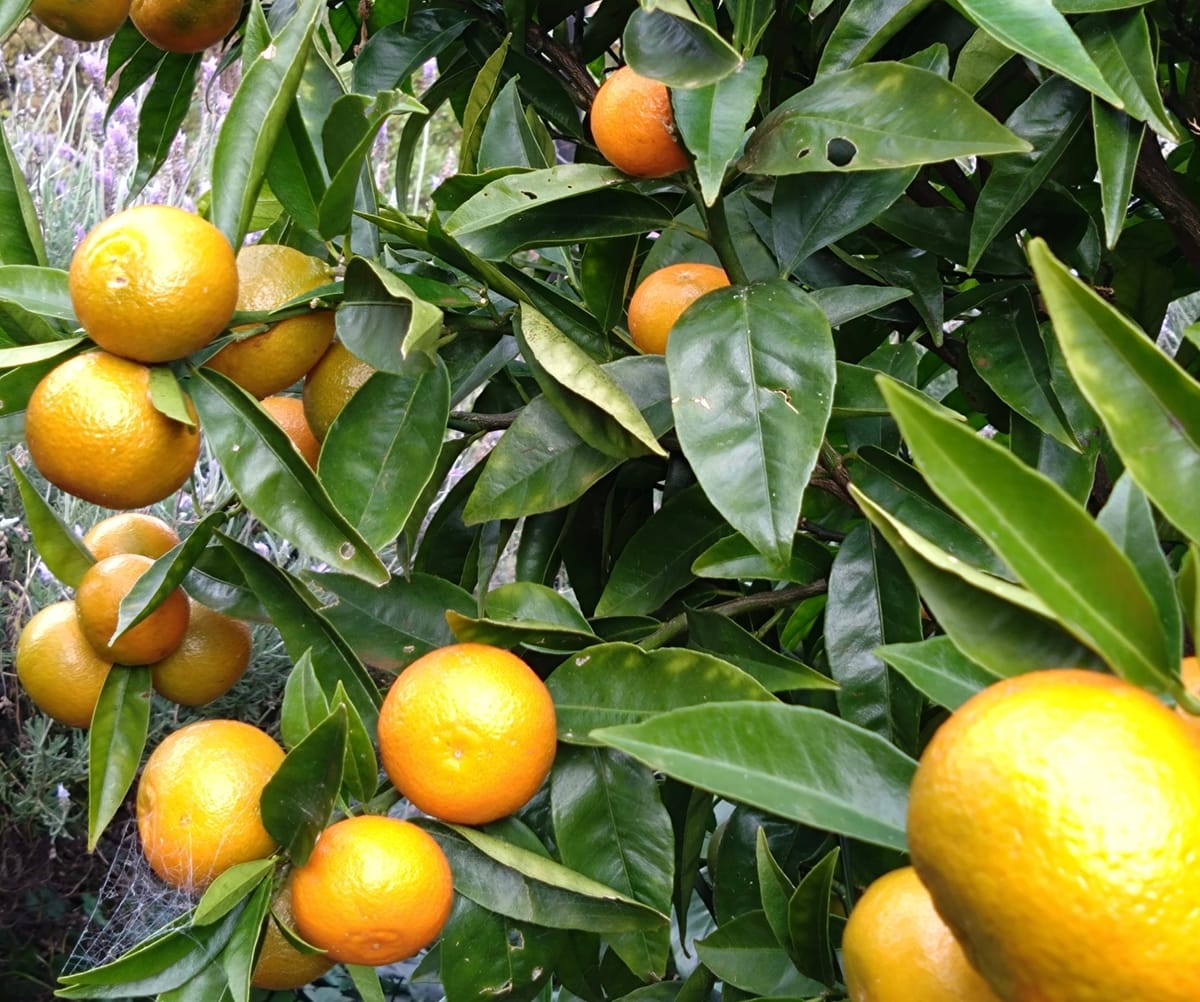
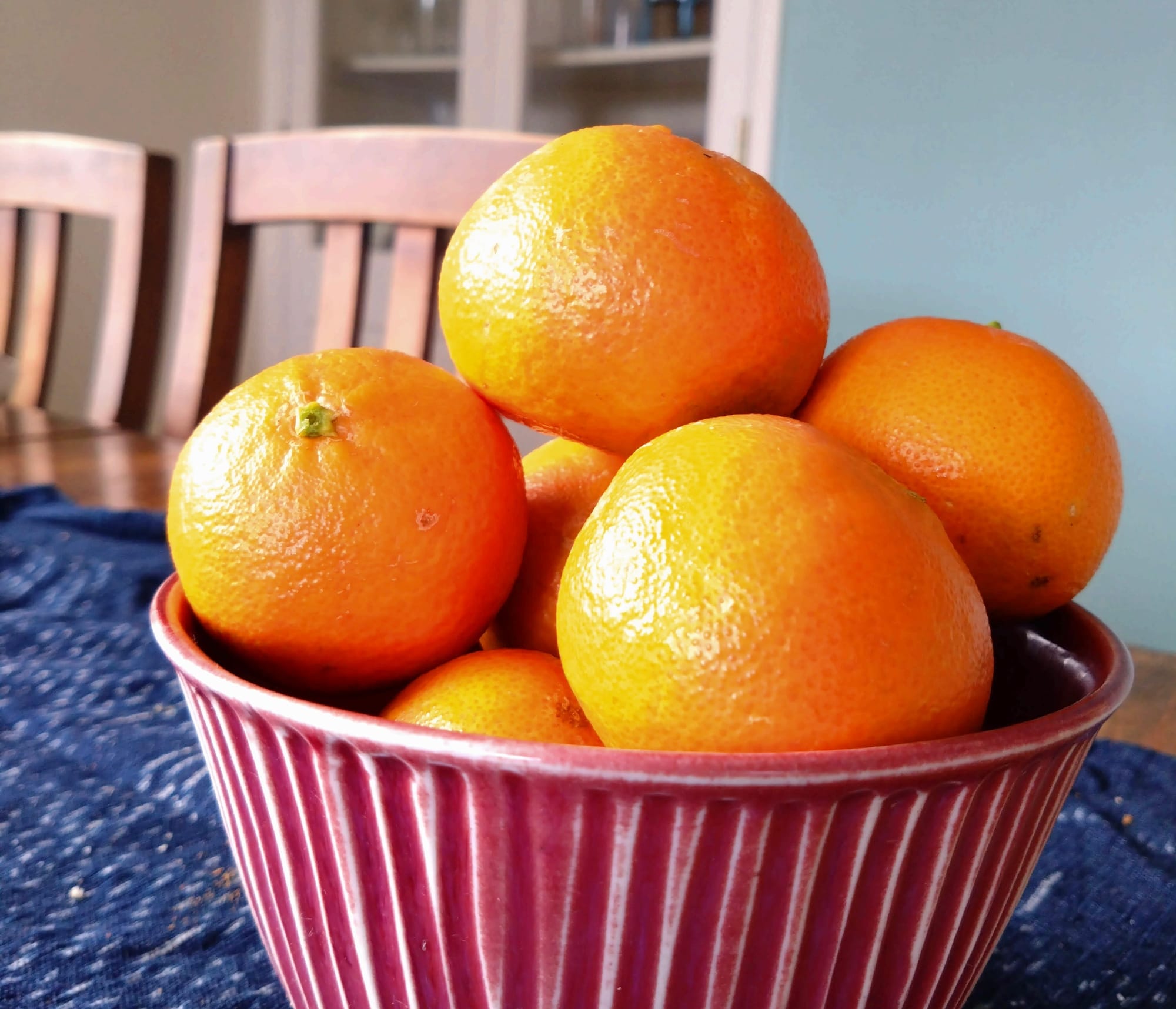
Our squat, heavily laden mandarin is the first thing I see after lifting the kitchen blind every morning. Bleary-eyed, I pause briefly in admiration, saluting the plucky tree for it's sweet crop.
The crop is the latest from our the mini orchard. Planted over the last decade, we've now got about 15 fruit trees. Since January we've harvested a sackful of Granny Smiths, countless buckets of feijoas and a decent haul of Sultan, Louisa and Damson plums. Roz bottled several jars of olives, and I best not neglect our faithful lemon.
In return for all this bounty, I have barely lifted a finger. Nature has quietly gone about it's business: producing, photosynthesizing, recycling, growing. I can’t get over how this happens without fanfare year-after-year. I almost take it for granted.
In recent weeks I’ve grown a deeper appreciation of what can be described as the gift economy of nature.
This idea has come to the fore after I talked with Molly Melhuish, a scientist, long-time citizen energy advocate and plant lover. When we met she was enthusing about the magnificent book by Robin Wall Kimmerer called Braiding Sweetgrass: indigenous wisdom, scientific knowledge and the teachings of plants.
In the first chapter Kimmerer describes the gift economy oft nature. The strawberry fields where she roamed as a child come to life in the book. She speaks of how berries, beans and apples are gifts, rather than goods, services or commodities. When you look at it this way we can have a renewed relationship with nature based on gratitude and reciprocity.
"What if we thought of that everything we consume is a gift from Mother Earth? I think we would take better care of what we are given."
The reciprocity Kimmerer speaks of comes from observation and sensitivity to the world around us. Scattering seeds and planting baby runners to promote crops in future years wasn't something a person taught her, but Kimmerer says she was shown this by the strawberries themselves.
In our concrete cities and disconnected online existence, the subtlety, beauty and gifts of nature are too often out of sight. We need to do more to reverse this.
I'm turning to the past to explore this further. Thirty years ago I wrote about how my late nana and her family reaped nature's bounty when she was growing up in Timaru in the 1910s and 20s. The article covers some other observations about living far more simply than we do today. Below I've reprinted the article from the May/ June issue of the New Zealand Political Review.
Sharing surpluses is good example how both the giver and those that receive a gift are rewarded. This brings to mind a vivid memory I have of boxes of fresh grapes arriving at our Dunedin home every autumn. These were picked, packaged and lovingly dispatched by my grandparents 350km north in Otautahi.
My partner’s parents, who ran the wonderful Te Puea Orchard on the outskirts of Rotorua, were committed sharers for the 60 plus year the land was in their care. Carl’s decision in 2017 to allow the Kai Rotorua charitable trust to use some fallow land to plant 14 varieties of kumara tipu (seed) is typical of his generosity. In the years since, the trust has harvested significant quantities of kumara planted using Maramataka as a guiding tool, and also learnt an enormous amount from a true man of the land. I have memories of many, many examples of such ever-present warmth and kindness.
I'm proud to carry on the sharing tradition, albeit in a modest way. Every visitor to our Kāpiti coast home has lemons, Kaffir lime leaves, and parsley thrust into their hands before they leave. This humble act of sharing without expectation of return is a way of keeping in touch with nature’s endless cycles of give and take.
A leap into the unknown
[Standfirst] A shift to Ted Trainer’s self-sufficient ‘radical conserver’ society requires a bold leap. But as Stephen Blyth discovers, it is not a vision that is completely unknown.
Ted Trainer, Australian social ecologist and activist, has a radical idea about the way we can live. It’s a vision that denies a central role to the market. Instead needs are met locally, people are not exploited nor is the environment. It’s a vision that requires that we “Abandon Affluence”, as the title of his 1985 book suggests.
Although a radical leap, Trainer’s ideas are grounded in values from the past. His vision relies on old time values of thrift and frugality. A more self-sufficient way of living. When Trainer spoke in Christchurch last October he suggested that many in the audience would remember a time of greater self-sufficiency. It was not that long ago.
Ways from the Past
My grandmother, Edith Blyth, recalls an abundance of homegrown produce as a child growing up in pre-World War One Timaru. As well as an enormous vegetable garden and a fowl run there were a variety of fruit trees on the family property. Apples, pears, cherry, apricot, quince, Japanese and Damson plum trees, along with walnuts and hazelnuts.
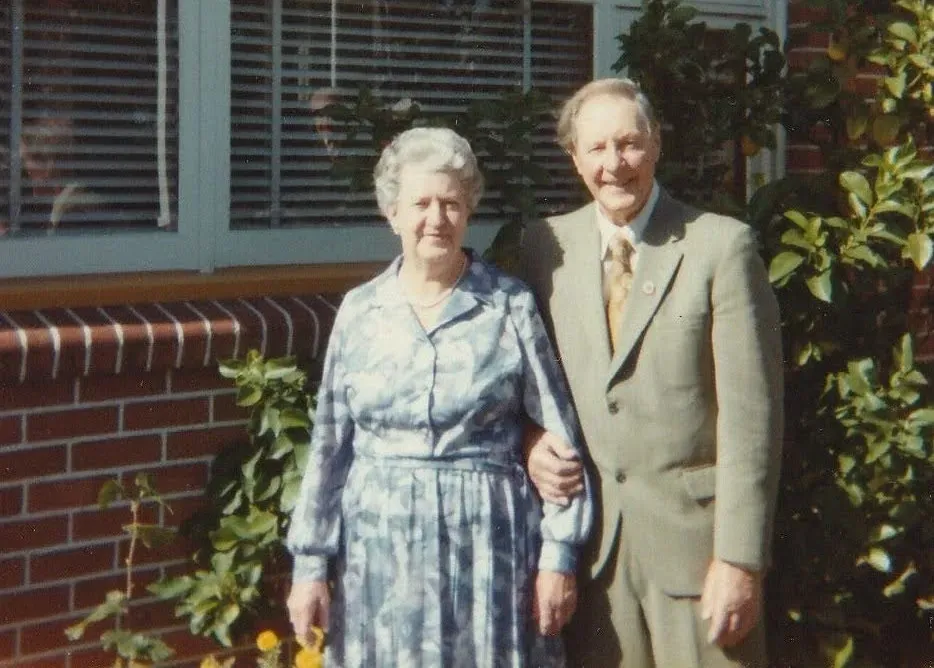
Neighbours shared garden produce when they had plenty. And as Edith’s brothers grew older they disappeared for days to hunt for rabbits and pigs.
Not that life was easy. My grandmother was one of nine children – her mother repaired and sewed all the children’s clothes because those that were available in the shops were too expensive and of poor quality. Washing was done by hand in a copper, and, as there were no pre-packaged cleaning products, elbow grease and borax or baking soda sufficed.
As for travel, Edith says public transport was the cheapest way to get places, people accepted it. She recalls trips to the sea that involved first a tram ride, then a train trip followed by a long walk. Few expected to own a car.
Now in her late eighties, Edith still has a small garden growing silverbeet, beans, potatoes and tomatoes on a city section. The lessons of self-sufficiency have remained with my grandmother for all her life.
Janet Holm, a historian and campaigner in the Christchurch environmental movement, also recalls a high degree of self-sufficiency during her childhood living on a North Canterbury farm in the 1930s.
A vegetable garden and fruit trees provided food for all the family and workers. The fields around the farm were foraged for produce, such as blackberries and mushrooms. Holm remembers he mother preserving 12 dozen eggs at a time with John Milton’s egg preserver in empty petrol tins. She made butter and cheese as well. The only things that were bought from the store were flour and baking supplies, sugar and tea. Neighbours and family often shared excess produce.
“People were very generous. If you ever went out you would be loaded with food. You would do the same when people visited,” Holm remembered.
“We were totally self-supporting, though I don’t remember everything. People didn’t spend a lot of money. Why? Because there wasn’t anything to buy. They weren’t being tempted, there were only essentials.”
Holm cautions that along with the frugality came other social pressures.
“Live was very puritanical, you worked very hard. And if you didn’t get much reward while you were alive you’d get it in heaven. There was an emphasis on virtue coming from hard work, frugality, etcetera. Enjoyment was seen as being slightly suspect.”
“You don’t think you’re deprived when it’s not there. For instance, it was terribly uncomfortable traveling by coach – you’d be black and blue. Yet nobody complained because there was no alternative. The moment they got the train through to Waitaki in 1875 then there were outcries against coaches and how uncomfortable they were,” Holm says.
Abandoning Affluence
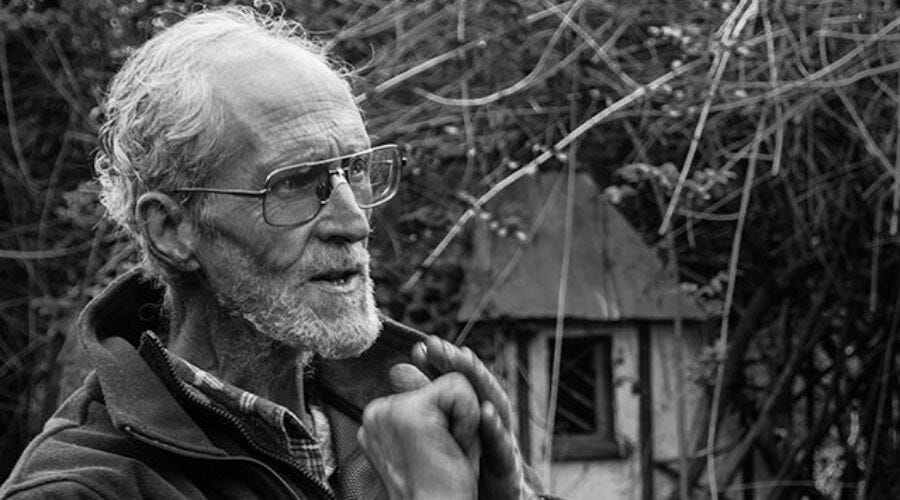
Trainer’s vision for the future embraces the values of self-suffiency that earlier generations knew, but goes beyond them. He calls it a radical conserver society, which is characterised by: non-affluence, a materially simpler way of living; a higher level of self-suffiency; much cooperation; and a zero growth economy.
For Trainer, the focus of the ‘new’ society is the neighbourhood. With production focused at the local level there would be far less trade and transport with decisions about economic activity decided by each community. Although free enterprise will play an important role, the market would be restricted to tiny firms in a highly regulated area.
Alienating large-scale manufacture would be replaced with small-scale craft production. Food would also be produced locally. Paid work would only have to be engaged in for one or two days a week at the most, because most of our basic needs would be met by the community.
“Instead of working in one boring job all day there would be a variety of useful things you’d do all day: working on community projects, gardening, visiting elderly in the neighbourhood, maybe one or two hours of paid work,” Trainer explains.
“The most interesting part of our economy would be in the cashless sector. Some through barter arrangements for swapping surpluses, there’d be gift giving, and there’d be free goods from trees and plants on common neighbourhood land.”
The common land would be provided by utilising idle land, such as unused sites, rooftops and spaces beside railway tracks. On this land gardens would be grown, fruit and nut trees planted. Foot and bicycle tracks between neighbourhoods would also become ‘edible landscapes’, using the permaculture concept. These forms of transport would be adequate because most work and leisure activities would be close to home.
Community decision-making would focus on neighbourhood workshops, the keeping place for tools and equipment that a community determined were necessary. As decisions on using land and providing energy would be made locally there would be no need for costly bureaucracies. People would share more things and work together on working bees, rosters and committees. Trainor thinks there would be a real sense of cohesion, something we know lack.
In the city centre, composed of several suburbs, there would be museums, theatres, other amenities, and importantly, a city bank. The bank would provide investment for projects within each city in ways that enrich the lives of people rather than for profit. City banks, along with community development corporations and community local trusts could fund projects that profit-driven developers overlook, such as small-scale craft oriented industry.
So a radical conserver society will improve the quality of our lives, be more environmentally sustainable and more just. But do we need to change?
Why do we need to change?
“We’re already having a serious impact on the global ecosystem, yet our supreme national goal is to increase the amount of consumption going on,” Trainer argues. The impact of the greenhouse effect, deforestation, pollution are having now will increase as growth continues, something conventional economic wisdom demands.
Trainer shows that even if the world only experience economic growth at the rate of three percent per annum over the next seventy years, by which time the world population will have doubled, we will have to produce eight times as much as we do now. If by 2060 less developed countries rise to our 1991 output and we continue to experience three per cent growth per annum then total world output will have to be 19 times what it is now. How can this be sustained?
According to Trainer the global economy is not only wasteful but incredibly unjust. One billion people in developed countries consume 80% of the world’s resources while the other four billion people on this planet make do with only 20% of the world’s resources.
“Our global economy is dictated by market principles, where scarce resources go to those who can bid most. It doesn’t matter how hungry you are, if you can’t bid as much as someone who wants the food more than you then you don’t get it,” Trainer explains.
In this way as many as 50,000 people die daily while a third of the world’s grain crop is fed to stock. It is why the cash crops, such as coffee or cocoa, are promoted in less developed countries rather than food for survival. It is why inappropriate technology is introduced into these countries. Maximising profits clearly comes before need.
Trainer warns that it is a mistake to assume that just by getting economics turnover going you are developing a country.
“There’s a contradiction between those things which generate more market activity and the things that make a good society, such as a concern for the other person, society, giving and mutual assistance.”
It is easy to see why Trainer is emphatic about change.
Can we change?
Trainer often mentions places where a more self-sufficient way of life is already happening. He likes to refer to the community bank established in Mulaney, Queensland, where the criteria for investing funds is community need. They’ve also started a business incubator that promotes small business. Israeli kibbutz, the City of Davis, California, and rural communities in which 60,000 Australians live are also cited.
There is a huge gulf between the changes being promoted and the society in which we live. Trainer acknowledges this, yet he still manages to be optimistic. He says,“We will”, not when, if or but. He is aware of the many hurdles and provides some answers.
Trainer is quick to point out that living in a radical conserver society does not mean abandoning the benefits of technology.
“Nothing I say suggests we have to have more primitive medicines, dentistry or technology of any sort that matters. All that I’m talking about is reorganising so we do things without waste. It’s not a matter of depriving ourselves, there’s reason to believe technology will be leaping ahead because we’ll eliminate the wasted effort of technologists designing things like sports cars.”
As to when it will happen Trainer is positive.
“A lot of the changes are very easy to do – they’re just simple, reasonable ways of reorganising. We could solve most of the problems in our cities in a few years. We don’t have to do things suddenly – we can carry them out over the next two decades.”
That is if education works. It is in this that Trainer sees as his chief role. As well as providing alternatives and analysis Trainer is attempting to live self-sufficiently with his family on a 10 hectare farm on the outskirts of Sydney. Most of their own food is grown there and they generate energy with solar panels and a windmill.
An important role of the ‘farm’ is as an example of self-sufficiency. Thousands of children visit annually to see appropriate technology in action. Trainer has also constructed a scale model of a self-sufficient neighbourhood as it would be in a radical conserver society.
The value such a society requires is not unknown. Although values of self-sufficiency have largely been replaced by consumerist values, they are still within living emory.
The self-sufficiency of the past that my grandmother recalls offers a useful guide to the practicalities of a radical conserver society. Her experiences show that people have lived more simply, that a much greater degree of self-sufficiency is possible. They also show that we do not need to define our existence by what we buy. As Trainer argues, we need to live more simply so that others may simply live.
Resources by Ted Trainer
– The Nature of a Sustainable Society, New Zealand Environment, no 67, 1991
– Abandoning Affluence, Zed Books, 1985
– Developed to Death, Greenprint, 1989.
First published in Political Review, May/ June 1993.